
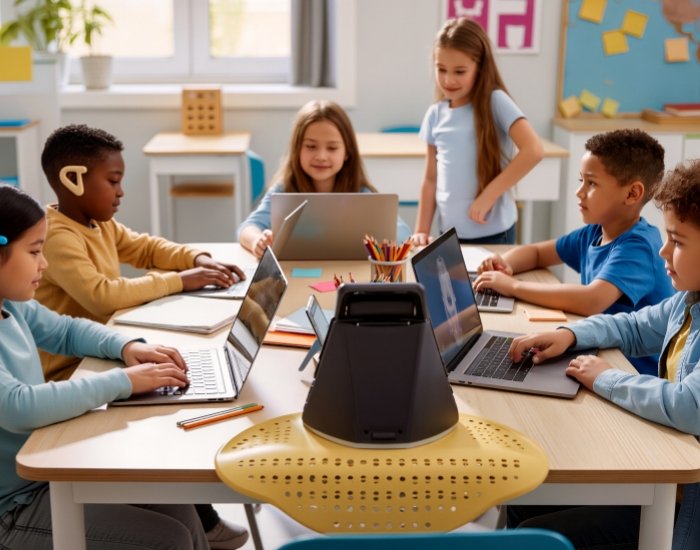
Artificial Intelligence (AI) is no longer just a futuristic concept—it is increasingly becoming part of our daily lives, from virtual assistants to personalized learning tools. For children, learning about AI is more than just understanding technology; it’s a way to develop critical thinking, problem-solving skills, and creativity. By introducing kids to AI concepts early, parents and educators can equip them with the skills they need to navigate a digital world confidently and thoughtfully.
This blog explores how AI learning helps children think smarter, enhances their cognitive abilities, and prepares them for a future where AI will play a significant role.
Table of Contents
- What Is AI Learning for Kids?
- Why AI Education Matters?
- Cognitive Benefits of AI Learning
- How AI Tools and Platforms Aid Learning
- Real-World Examples of AI Learning for Children
- Challenges and How to Overcome Them
- FAQs
- Final Thoughts
1. What Is AI Learning for Kids?
AI learning for children involves understanding the basics of how machines think, learn, and make decisions. Unlike traditional programming, which relies on fixed instructions, AI introduces kids to systems that adapt and improve from experience. Children can interact with AI through games, coding platforms, and problem-solving activities that simulate real-life AI applications. The goal is not only technical literacy but also to foster a mindset that approaches problems logically, creatively, and analytically.
2. Why AI Education Matters?
AI is shaping almost every industry today—from healthcare and education to finance and entertainment. By learning AI concepts early, children gain:
- Digital Literacy: Understanding how AI works helps kids navigate technology responsibly.
- Future Readiness: Early AI exposure prepares children for careers in technology, engineering, and data science.
- Cognitive Growth: AI activities challenge children to think critically, solve problems, and make informed decisions.
AI education is not just about coding or robotics; it’s about developing smarter thinking habits.
3. Cognitive Benefits of AI Learning
Learning AI provides children with a wide range of cognitive benefits that enhance their ability to think critically and solve problems.
Enhances Problem-Solving Skills
AI learning encourages children to break down complex problems into smaller steps, analyze patterns, and test solutions. Activities like training a simple machine learning model or creating an AI-based game teach children to anticipate outcomes, debug errors, and refine their strategies. These skills directly improve problem-solving abilities that are valuable across academic subjects and daily life.
Boosts Creativity
Working with AI stimulates creativity by allowing children to experiment with new ideas. For example, kids can design chatbots, develop interactive stories, or create AI-powered animations. AI learning challenges them to think outside the box and explore multiple solutions, nurturing innovative thinking.
Strengthens Analytical Thinking
AI tasks often require logical reasoning and analysis of large amounts of information. By engaging with data sets, identifying patterns, and predicting outcomes, children develop strong analytical thinking skills. This helps them in science, mathematics, and decision-making in real-life situations.
Encourages Decision-Making
AI learning involves making choices based on data, testing the results, and iterating. This trial-and-error approach teaches children to weigh options, evaluate consequences, and make informed decisions, building confidence and independence.
4. How AI Tools and Platforms Aid Learning
Several tools and platforms make AI learning both accessible and engaging for children. Scratch AI extensions introduce basic AI concepts through interactive projects, while Machine Learning for Kids allows children to train AI models for simple applications. Chatbot builders let kids design conversational AI that can understand responses and adapt behavior, and robotics kits with AI teach AI-driven decision-making through hands-on programming. These tools make AI concepts tangible, allowing children to apply what they learn in creative and practical ways.
5. Real-World Examples of AI Learning for Children
AI learning extends beyond coding, enabling children to apply concepts in various real-world contexts. Personalized learning platforms can adapt lessons to a child’s pace and learning style, while interactive AI-powered games teach logic, strategy, and pattern recognition. Kids can also explore smart assistants, such as Siri or Alexa, to understand how AI operates in daily life. Additionally, data analysis projects allow children to examine datasets, make predictions, and visualize results. These examples demonstrate how AI learning connects theoretical knowledge with real-world applications, making the learning experience meaningful and engaging.
6. Challenges and How to Overcome Them
Despite the benefits, AI learning may present some challenges for children and parents. Complex concepts can be abstract, but using simplified, interactive tools makes learning more approachable. Screen time management is important, so balancing AI learning with offline activities and breaks helps maintain health and focus. Resource availability may be limited, but free online platforms, community programs, and workshops provide affordable options. Finally, maintaining interest is key, which can be achieved by making AI projects fun, project-based, and collaborative. With consistent guidance and support, these challenges can be managed effectively, allowing children to fully benefit from AI learning experiences.
7. Frequently Asked Questions
1. At what age can children start learning AI?
Children can start learning basic AI concepts as early as 7–8 years old using visual and interactive tools.
2. Is AI learning only about coding?
No. AI learning also involves problem-solving, logical thinking, and creativity, beyond just programming.
3. How does AI improve critical thinking?
AI projects teach children to analyze data, anticipate outcomes, test solutions, and adjust strategies, which strengthens critical thinking.
4. Can AI learning help in school subjects?
Yes. Skills gained through AI learning enhance math, science, logic, and analytical reasoning.
5. What tools are best for kids to learn AI?
Tools like Scratch AI extensions, Machine Learning for Kids, chatbot builders, and robotics kits are effective and age-appropriate.
8. Final Thoughts
AI learning equips children with smarter thinking habits and prepares them for a technology-driven world. Beyond coding, AI encourages problem-solving, creativity, analytical thinking, and informed decision-making. By introducing AI concepts early, parents and educators can help children develop skills that benefit academics, personal growth, and future career opportunities.
Give your child the advantage of learning AI with KidsCodeBD. Our programs combine fun, hands-on projects with age-appropriate AI activities, helping children think smarter, innovate creatively, and gain confidence in the digital world.