
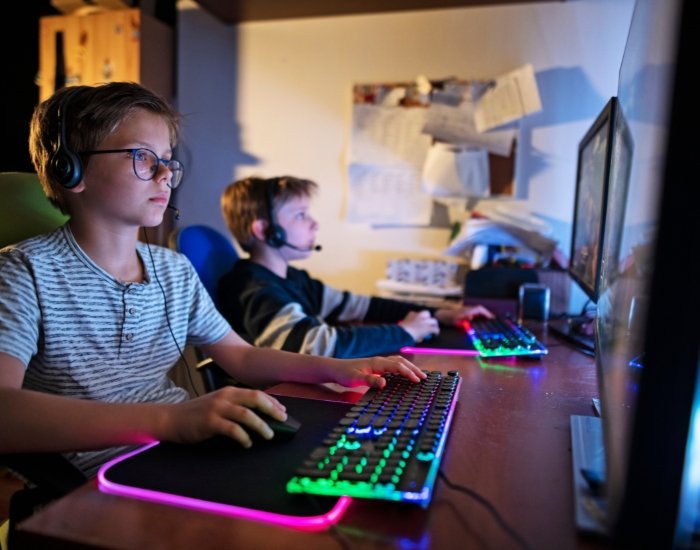
Screen time has become a major part of children’s daily lives. From mobile games and YouTube videos to online classes and apps, kids today spend more time on screens than ever before. This has raised a common concern among parents: Is screen time harming my child, or can it be used productively?
The answer lies not in completely avoiding screens, but in how screen time is used. While gaming is often seen as entertainment, coding transforms screen time into a powerful learning experience. This blog explores the difference between coding and gaming, how both affect children, and how parents can turn screen time into meaningful skill time.
Table of Contents
- Understanding Screen Time for Kids
- What Is Gaming?
- What Is Coding?
- Key Differences Between Coding and Gaming
- Educational Benefits of Coding Over Gaming
- Can Gaming and Coding Coexist?
- How Parents Can Turn Screen Time Into Skill Time
- FAQs
- Final Thoughts
1. Understanding Screen Time for Kids
Screen time refers to the time children spend using digital devices such as smartphones, tablets, computers, and televisions. While excessive or unstructured screen use can negatively impact focus and health, purposeful and guided screen time can be highly beneficial.
The goal is not to eliminate screens but to help children engage with technology in a way that promotes learning, creativity, and critical thinking.
2. What Is Gaming?
Gaming typically involves playing video games for entertainment. Games can be online or offline and range from simple puzzle games to complex multiplayer environments.
Positive Aspects of Gaming
Gaming is not entirely negative. It can help children:
- Relax and unwind
- Improve hand-eye coordination
- Learn teamwork in multiplayer games
- Develop quick decision-making skills
Limitations of Gaming
However, excessive gaming can lead to:
- Reduced attention span
- Passive consumption rather than creation
- Limited skill development beyond gameplay
- Overdependence on rewards and stimulation
When gaming dominates screen time without balance, it may limit opportunities for deeper learning.
3. What Is Coding?
Coding is the process of creating instructions that tell a computer what to do. Unlike gaming, coding is an active skill-building activity where children create, experiment, and solve problems.
Through coding, kids can:
- Build games and animations
- Design websites and apps
- Create interactive stories
- Learn how technology actually works
Coding turns children from technology users into technology creators.
4. Key Differences Between Coding and Gaming
Although both coding and gaming involve screen use, they affect children in very different ways. Coding focuses on problem-solving, logical thinking, and creativity, encouraging children to actively build, experiment, and learn through trial and error. Gaming, on the other hand, is primarily entertainment-driven and usually involves following predefined rules and pathways created by others. While coding supports long-term skill development and deeper understanding, gaming often provides short-term engagement. Most importantly, coding teaches children how technology works behind the scenes, whereas gaming mainly teaches them how to use technology.
5. Educational Benefits of Coding Over Gaming
Coding offers several educational advantages that go beyond entertainment. It helps children develop critical thinking and logical reasoning by teaching them to approach problems step by step. Through coding, kids learn how to analyze challenges, recognize patterns, and create structured solutions—skills that are valuable not only in technology but also in math, science, and everyday decision-making.
Coding also encourages creativity and innovation. Unlike gaming, where outcomes are limited by the game’s design, coding allows children to imagine and build their own ideas. They can create original games, animations, and interactive projects, fostering originality and innovative thinking.
In addition, coding helps children develop real-world skills such as problem-solving, persistence, patience, attention to detail, and independent learning. These skills play a crucial role in academic success and prepare children for future career opportunities. By engaging actively rather than passively, coding turns screen time into productive learning time, helping children interact with technology in a meaningful and purposeful way.
6. Can Gaming and Coding Coexist?
Gaming and coding do not need to be viewed as opposites. In many cases, gaming can actually serve as a gateway to coding. Children who enjoy playing games often become curious about how those games are created, which can motivate them to learn coding. When balanced properly, gaming can be used as motivation, while coding teaches the underlying concepts behind game development. This balance allows children to transition from simply playing games to creating their own. The key lies in moderation and guidance, where coding takes priority as a learning activity and gaming remains a recreational activity.
7. How Parents Can Turn Screen Time Into Skill Time
Parents play an essential role in guiding how children use technology. Turning screen time into skill time starts by focusing on quality rather than quantity. Instead of limiting screen use strictly by hours, parents can encourage time spent on learning platforms, coding projects, and creative digital activities. Introducing coding at an early age through visual programming tools helps make learning feel natural and enjoyable for children.
Encouraging project-based learning is another effective approach. When children work on small coding projects such as games, animations, or simple apps, they remain engaged and can clearly see the results of their efforts. Balancing fun and learning is equally important. Allowing some gaming time while pairing it with coding activities—such as building a simple version of a favorite game—keeps children motivated. Parents do not need to be tech experts; showing interest, asking questions, and celebrating achievements can greatly boost a child’s confidence and enthusiasm for learning.
8. Frequently Asked Questions
1. Is gaming bad for children?
Gaming is not inherently bad, but excessive or unbalanced gaming can limit learning opportunities. Moderation is key.
2. How is coding better than gaming?
Coding builds problem-solving, creativity, and real-world skills, while gaming is mainly entertainment-focused.
3. Can gaming help kids learn coding?
Yes. Interest in games often motivates children to learn coding so they can create their own games.
4. How much screen time should be dedicated to coding?
Even 30–60 minutes a day of coding can be highly beneficial when done consistently.
5. Do kids need advanced computers to learn coding?
No. Many beginner coding platforms work on basic computers, tablets, or even smartphones.
9. Final Thoughts
Screen time is not the enemy — unproductive screen time is. While gaming can be fun and relaxing, coding empowers children with skills that shape their thinking, creativity, and future opportunities. By guiding children toward coding, parents can transform screen time into meaningful skill time that supports learning and growth.
The goal is balance, awareness, and purposeful use of technology.
Disclaimer: Help your child turn screen time into skill time with KidsCodeBD. Our coding programs are designed to engage young minds, encourage creativity, and build essential problem-solving skills—making technology a tool for learning, not just entertainment.